
UTQG Treadwear, Traction and Temperature Grades
The Uniform Tire Quality Grading (UTQG) code on a sidewall, for example 500 A A, gives three federally required ratings: a treadwear number relative to a control tire scored at 100, a traction grade (AA, A, B or C) for wet straight-line braking, and a temperature grade (A, B or C) for heat resistance at speed. A 500 A A tire should last five times as long as the control tire, brakes well in the wet and handles highway heat.
The system, run by the NHTSA since 1979, is useful but limited: manufacturers run the treadwear test themselves, so it only compares within a brand, and winter, LT and spare tires are exempt. Here is how each grade is measured and how to use the code without being misled.
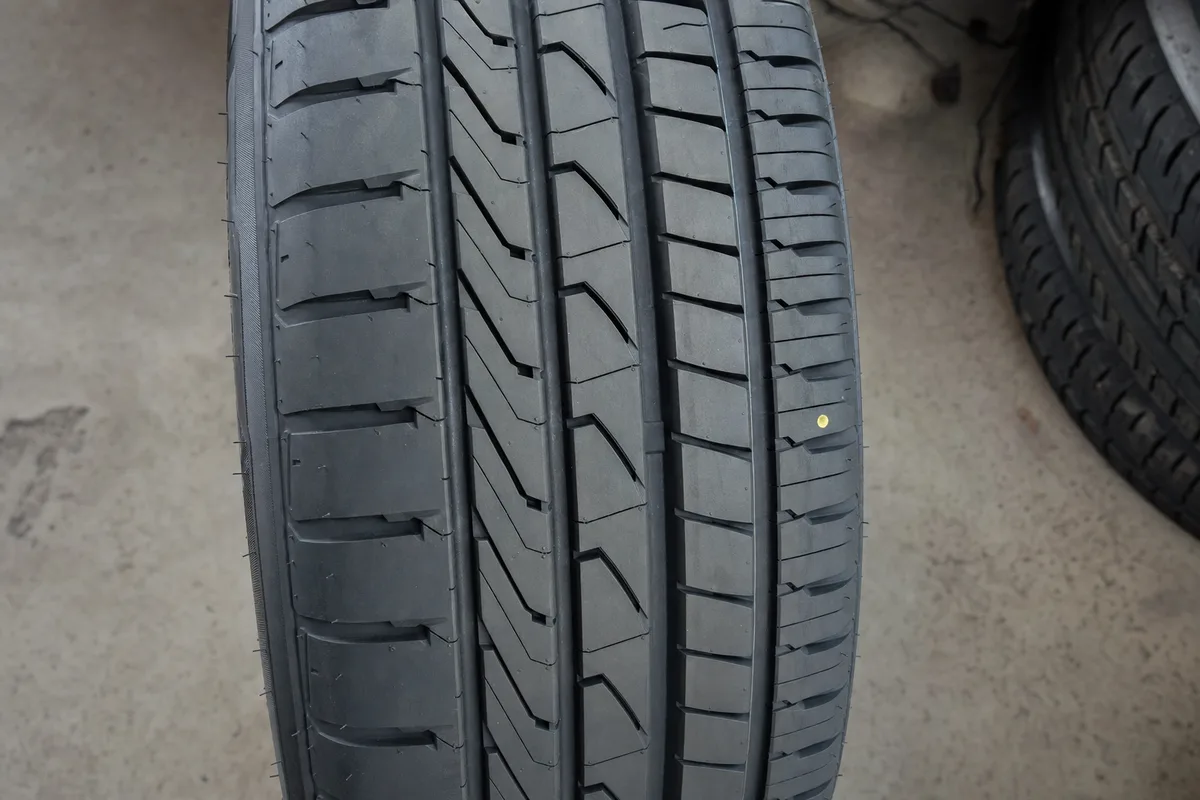
Treadwear: the relative mileage number
The treadwear grade comes from a 7,200 mile convoy test on a fixed public route near San Angelo, Texas. Test tires run alongside a government-specified control tire graded 100, and their wear rate is measured every 800 miles. A tire that wears half as fast as the control gets 200; one that wears a fifth as fast gets 500. The scale is open-ended; modern touring tires commonly carry 600 to 800, and some long-life models exceed 800.
The catches:
- Manufacturers run the test and assign the grade. They can grade lower than the test result, and some do for marketing reasons (to differentiate a premium line) or to be safe.
- Grades are only required to be consistent within a brand. A Michelin 540 and a budget-brand 540 have not been compared with each other.
- 7,200 miles is a short test; extrapolation to 60,000 miles introduces error.
- Your driving, alignment and inflation swing real mileage by 50 percent or more.
A rough conversion many in the industry use: treadwear 300 is about 30,000 miles, 500 about 45,000 to 55,000, 700 about 65,000 to 75,000, for a normal driver with proper maintenance. Treat those as bands, not promises.
| Tire type | UTQG treadwear grade |
|---|---|
| Track and summer | 140-300 |
| Performance all-season | 340-500 |
| Touring all-season | 500-700 |
| Long-wear touring | 700-840 |
The grade is set by each manufacturer against its own control tire, so it compares models within a brand far better than across brands.
Traction: wet braking only
The traction grade measures the tire's coefficient of friction when locked and skidded straight ahead on wet asphalt and wet concrete at 40 mph on a government test trailer. It does not measure cornering, dry grip, snow, or ABS-assisted braking, which is how almost every modern car actually stops.
| Grade | Wet asphalt coefficient | Wet concrete coefficient | Share of tires today |
|---|---|---|---|
| AA | above 0.54 | above 0.38 | Performance and premium touring tires |
| A | above 0.47 | above 0.35 | Most passenger tires |
| B | above 0.38 | above 0.26 | Some budget and older designs |
| C | below B thresholds | Rare; legal minimum |
Because the vast majority of tires sold are A or AA, traction is a floor rather than a comparison. An AA tire is not necessarily better than an A tire in real wet braking with ABS, and independent tests routinely find A-rated tires out-stopping AA-rated ones. A B or C grade, on the other hand, is a genuine red flag on a passenger tire.
Temperature: heat resistance at speed
The temperature grade measures how well a tire dissipates heat on an indoor test wheel at increasing speeds, under load and at a set pressure.
| Grade | Sustained test speed | Meaning |
|---|---|---|
| A | over 115 mph | Highest heat resistance |
| B | 100 to 115 mph | Adequate |
| C | 85 to 100 mph | Legal minimum under federal standard 109 |
Heat is what kills tires: it breaks down the rubber and the bonds between plies and belts. Grade A is the norm on modern tires and effectively required for any speed rating of H or higher. B still appears on some budget tires and older designs. Treat C as a reason to look elsewhere. As with traction, the grade is a floor, and the speed rating tells you more about a tire's high-speed capability; see speed rating and load index.
How to use UTQG when shopping
- Compare treadwear within a brand. Choosing between a Michelin Defender2 (treadwear 800) and a Michelin Primacy Tour A/S (500) is a fair use: one is built for mileage, the other for a quieter, grippier ride.
- Use treadwear as a compound indicator across brands. Anything under 300 is a sticky, short-lived performance compound; 400 to 600 is a balanced all-season; above 600 is a hard, long-life compound that will usually give up some wet grip and be a little noisier. This holds loosely across brands even if the exact numbers do not.
- Check traction and temperature for red flags only. Reject B or C; do not pay extra for AA.
- Cross-check with the mileage warranty. A 700 treadwear tire with a 40,000 mile warranty is telling you the manufacturer does not believe its own number as much as its 80,000 mile competitor with a 700 grade does. See tire warranties explained.
- Then read independent tests. Consumer Reports, Tire Rack and European magazines publish measured wet braking, hydroplaning, noise and tread life. Those numbers beat a UTQG code every time.
Our brand pages, for example Continental and Cooper, list UTQG alongside the warranty for each model so you can spot the mismatch quickly.
Who is exempt, and what the code cannot tell you
UTQG applies to passenger car tires only. These tires do not carry it:
- Winter tires with the 3PMSF symbol (deep-lug winter tires are exempt; some all-weather tires still carry grades voluntarily)
- LT light-truck tires and ST trailer tires
- Temporary spares and tires under 12 in rim diameter
- Certain limited-production and racing tires
And even on graded tires, the code says nothing about:
- Dry cornering grip and steering response
- Snow and ice traction (that is what 3PMSF is for; see all-season vs all-weather vs winter)
- Hydroplaning resistance, which depends on tread design and depth
- Noise and ride comfort
- Rolling resistance and fuel economy
- How the tire performs after 30,000 miles of wear, when siping is gone
The NHTSA has periodically considered adding rolling resistance and wet traction grades measured under ABS, as the EU label does, but as of 2026 the US label remains the three original grades.
Reading real examples
| Tire (typical grade) | UTQG | What it says |
|---|---|---|
| Michelin Defender2 | 800 A A | Long-life touring; expect 70,000 miles or more with rotation |
| Continental PureContact LS | 700 A A | Touring tire with a balanced compound |
| Goodyear Assurance WeatherReady | 700 A A | All-weather tire with a graded rating (not exempt) |
| Bridgestone Potenza Sport | 300 AA A | Max-performance summer tire; sticky, short-lived |
| Budget all-season, unnamed | 420 A B | Moderate life, adequate wet grip, lower heat resistance; a B temperature grade on a passenger tire suggests older construction |
| Extreme-performance summer tire | 200 AA A | Track-day compound; 15,000 to 20,000 miles at best |
Grades shown are typical for those model lines at the time of writing; manufacturers can change grades between production runs, so confirm on the specific tire's sidewall or product page before buying.
Frequently asked questions
What does 500 A A mean on a tire?
Treadwear 500, traction A, temperature A. The tire should last about five times as long as the government control tire in the same maker's test, meets the second-highest wet braking grade, and has the highest heat-resistance grade. In practice that is a solid all-season with roughly 45,000 to 55,000 miles of expected life.
Is a higher treadwear rating always better?
Higher means longer tread life within a brand's lineup, but it usually comes with a harder compound that gives up some wet grip and comfort. A 300 grade is right for a sports car; 500 to 700 suits a daily driver. The number does not compare reliably across brands.
How many miles is treadwear 600?
For a typical driver who rotates on schedule and keeps pressure correct, roughly 55,000 to 65,000 miles. Aggressive driving, front-wheel-drive without rotation, or misalignment can halve that. Use the manufacturer's mileage warranty as a second opinion.
Why do winter tires have no UTQG rating?
Federal rules exempt deep-tread winter tires, along with LT truck tires, trailer tires and temporary spares, because the tests were designed around highway passenger tires. Some all-weather tires carry a grade voluntarily. For winter tires, look for the 3PMSF symbol and independent snow and ice tests instead.
What is a good traction rating?
A or AA. Nearly every current passenger tire earns one of those, so the grade mostly serves to flag the rare B or C tire you should avoid. Because the test is a locked-wheel skid, an AA grade does not guarantee shorter stops than an A tire in a real ABS-equipped car.
Updated September 2026.