
Run-Flat Tires
Reinforced tires that carry the car about 50 miles at 50 mph after losing all air.
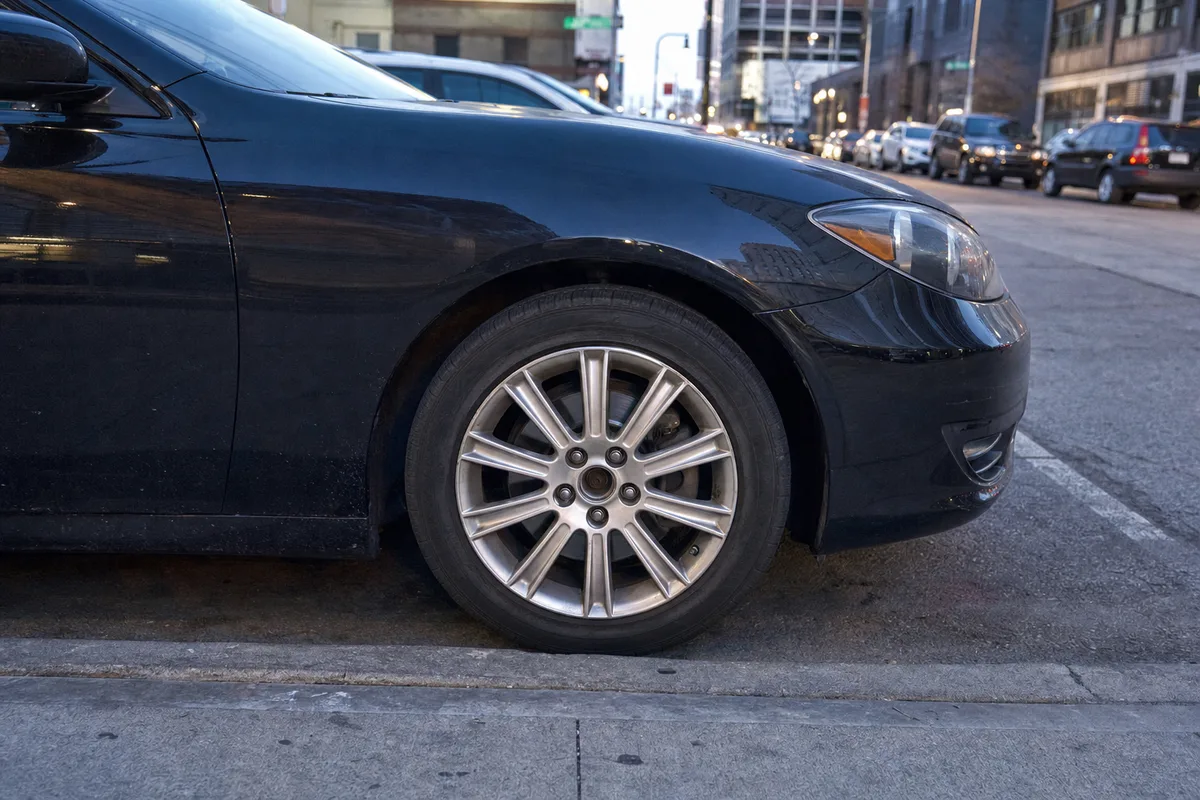
Run-flat tires have stiff, reinforced sidewalls that support the car's weight with zero air pressure, typically for about 50 miles at up to 50 mph. That lets you drive to a shop instead of changing a tire on the shoulder, and it lets automakers delete the spare to save weight and trunk space. BMW, Mini, many Mercedes, Cadillac and Lexus models come on run-flats from the factory, and those cars have no spare and often no jack.
They are for people who own a car that came with run-flats and want to keep the safety and convenience, and for drivers who cannot or do not want to change a tire on the roadside. They require a tire pressure monitoring system (TPMS), since a flat run-flat feels almost normal from the driver's seat.
The honest trade-offs are significant. Run-flats ride harder because of the stiff sidewalls, cost 20 to 40 percent more than the equivalent conventional tire, offer fewer choices in each size, and a punctured run-flat usually must be replaced rather than repaired once it has been driven flat. Tread life is often shorter. Many BMW and Mini owners switch to conventional tires and carry a plug kit and inflator, which is safe as long as all four tires are changed together. Newer designs like the Bridgestone DriveGuard Plus have narrowed the comfort gap and even carry mileage warranties. When shopping, look for the run-flat marking (RFT, ROF, SSR, ZP, DSST or EMT depending on brand), match the OE code if you want the factory tire, and check whether the size you need exists as a run-flat at all. Prices run from about 150 dollars for a 16-inch tire to 400 dollars for premium 20-inch performance sizes.
Buy this if
Owners of cars that came without a spare, and drivers who value never being stranded by a flat.
- Drive about 50 miles at 50 mph with no air
- No roadside tire change, safer on busy highways
- Frees trunk space and weight by removing the spare
Skip it if
Ride comfort matters to you more than convenience, or your car has a spare and you are comfortable using it.
- Harsher ride from stiff sidewalls
- 20 to 40 percent more expensive with fewer size and model choices
- Usually not repairable after being driven flat
Best run-flat tires right now
Bridgestone DriveGuard Plus
The most comfortable run-flat sold, with a 65,000-mile warranty, and it fits cars that never had run-flats.
Continental ProContact TX SSR
OE on many BMW and Mini models, a quiet all-season with Continental's self-supporting construction.
Goodyear Eagle LS-2 RunOnFlat
The factory all-season on many BMW 3 and 5 Series, a like-for-like replacement.
Michelin Primacy MXM4 ZP
Michelin's touring run-flat for BMW and Mercedes, quiet with a 30,000-mile warranty.
Pirelli P Zero Run Flat
The performance run-flat for BMW M and Mercedes AMG cars that came on P Zeros.
Common sizes for run-flat tires
Run-Flat Tires: common questions
Can I replace run-flat tires with regular tires?
Yes, as long as you replace all four and understand your car has no spare. Many BMW and Mini owners do this for a softer ride and lower cost, and carry a plug kit, inflator or roadside membership instead. Some manufacturers advise against it, but the car's TPMS and handling work normally with conventional tires.
How far can you drive on a flat run-flat tire?
Most are rated for about 50 miles at up to 50 mph with zero pressure. Heavier loads, high speeds and hot weather reduce that. The car's TPMS will warn you, since a flat run-flat feels nearly normal. Get to a shop promptly; the sidewall is being damaged the entire time.
Can run-flat tires be repaired?
Only rarely. Most manufacturers say a run-flat that has been driven with low or no pressure must be replaced, because the sidewall structure may be damaged in ways that cannot be seen. A small tread puncture caught early, before the tire was driven flat, can sometimes be patched by a shop willing to do it. Bridgestone permits repair of the DriveGuard under specific conditions.
Why do run-flat tires ride so hard?
The sidewalls are thick and stiff enough to carry the car with no air, which means they absorb far less of the road than a conventional sidewall. Newer designs like the Bridgestone DriveGuard Plus and the latest BMW-approved tires are noticeably better than run-flats from ten years ago, but a conventional tire in the same size will still ride softer.