
Trailer Tires
ST-rated tires built for the sideways loads and heat of towing a trailer, never for a car.
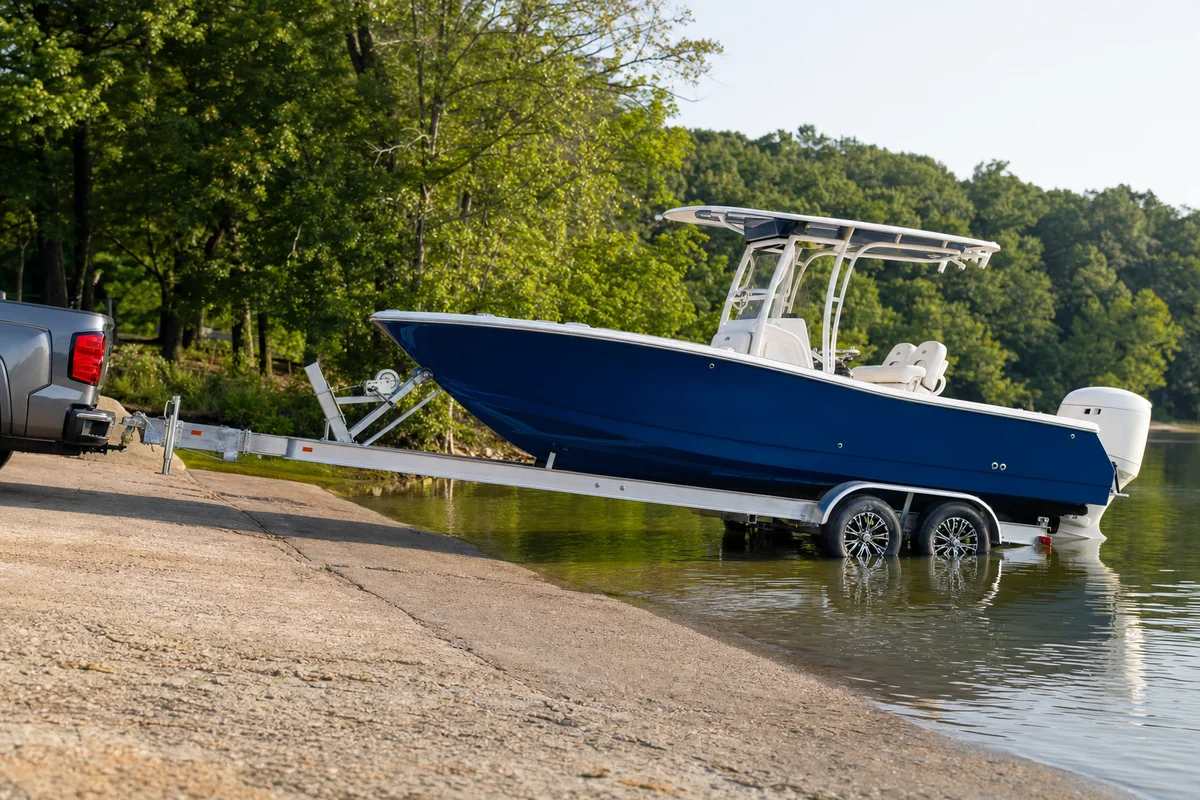
Trailer tires are a separate species. They carry the ST (Special Trailer) designation and are built with stiffer sidewalls, more plies and a compound tuned for load-carrying and heat rather than grip or comfort. A trailer does not steer or brake the way a car does; it gets dragged sideways through turns and sits for months at a time, so the tire must resist sidewall flex, ozone cracking and the heat that builds up in a heavily loaded tire at highway speed.
They are for anyone who tows a boat, camper, utility, horse or car trailer. Never put passenger or light-truck tires on a trailer axle unless the trailer maker specifies them, and never put ST tires on a vehicle; their softer grip and stiff construction are dangerous on a car.
The honest facts: trailer tires fail more often than car tires, almost always from overloading, underinflation, age or speed. Most ST tires are rated for 65 mph, some newer ones for 75 mph or more (look for the speed letter: L is 75 mph, M is 81 mph). They should be replaced by age, typically every five to six years regardless of tread, since sidewall cracking from sitting in the sun is the usual killer. When shopping, match or exceed the load range on the trailer's placard (C, D or E are common), buy radials rather than bias-ply for highway use, check the date code, and keep them at the maximum sidewall pressure. Goodyear's Endurance is the best-known US-built ST radial; other brands in our range make relatively few ST tires, and specialty brands such as Carlisle, Maxxis and Hercules fill out the market. Prices run from about 80 dollars for a 13-inch tire to 250 dollars for a 16-inch load range E radial.
Buy this if
Anyone towing a boat, camper, utility, horse or car-hauler trailer with axles that call for ST tires.
- Stiff sidewalls resist the sideways loads a trailer puts on tires
- Higher load capacity per size than passenger tires
- Compounds resist ozone and cracking from sitting
Skip it if
You are shopping for a vehicle; ST tires are never safe on a car, truck or SUV.
- Most are limited to 65 mph unless marked with a higher speed letter
- Must be replaced by age, usually every 5 to 6 years
- Cheap imports have a poor reliability record
Best trailer tires right now
Goodyear Endurance
US-built, N-rated to 87 mph and the most trusted ST radial for campers and boat trailers.
Trailer Tires: common questions
Can I use car tires on a trailer?
Only if the trailer manufacturer specifies passenger or LT tires, which is rare outside heavy car haulers. Passenger tires have flexible sidewalls that sway under a trailer's sideways loads and run hotter. ST tires are built specifically for the job and are the correct choice for almost every consumer trailer.
Why do trailer tires blow out so often?
Almost always from one of four things: overloading beyond the tire's rating, underinflation (trailer tires should run at the maximum sidewall pressure), age (sidewall cracking after five or six years) or speed above the tire's rating. Cheap bias-ply imports also have a much worse record than name-brand radials.
How fast can I tow on trailer tires?
Most ST tires are rated for 65 mph unless a speed letter on the sidewall says otherwise. L means 75 mph, M means 81 mph and N means 87 mph. Exceeding the rating builds heat quickly and is the leading cause of blowouts on long interstate trips.
How often should trailer tires be replaced?
Every five to six years from the date code on the sidewall, regardless of tread depth. Trailer tires typically die from age and sun rather than wear. Check the four-digit DOT date code (week and year) when you buy, and avoid tires that are already two or more years old.