
How to Read a Tire Size (205/55R16 Explained)
A tire size like 205/55R16 91V reads like this: 205 is the tread width in millimeters, 55 means the sidewall height is 55 percent of that width, R stands for radial construction, 16 is the wheel diameter in inches, 91 is the load index (1,356 lbs per tire) and V is the speed rating (149 mph). That is everything you need to shop for a replacement.
The size your car needs is printed on the tire placard inside the driver's door jamb, not just on the tire currently mounted. Check the placard first, because the previous owner or a shop may have fitted a different size. Below we walk through each part of the code, the P and LT prefixes, and the odd-looking flotation sizes on trucks.
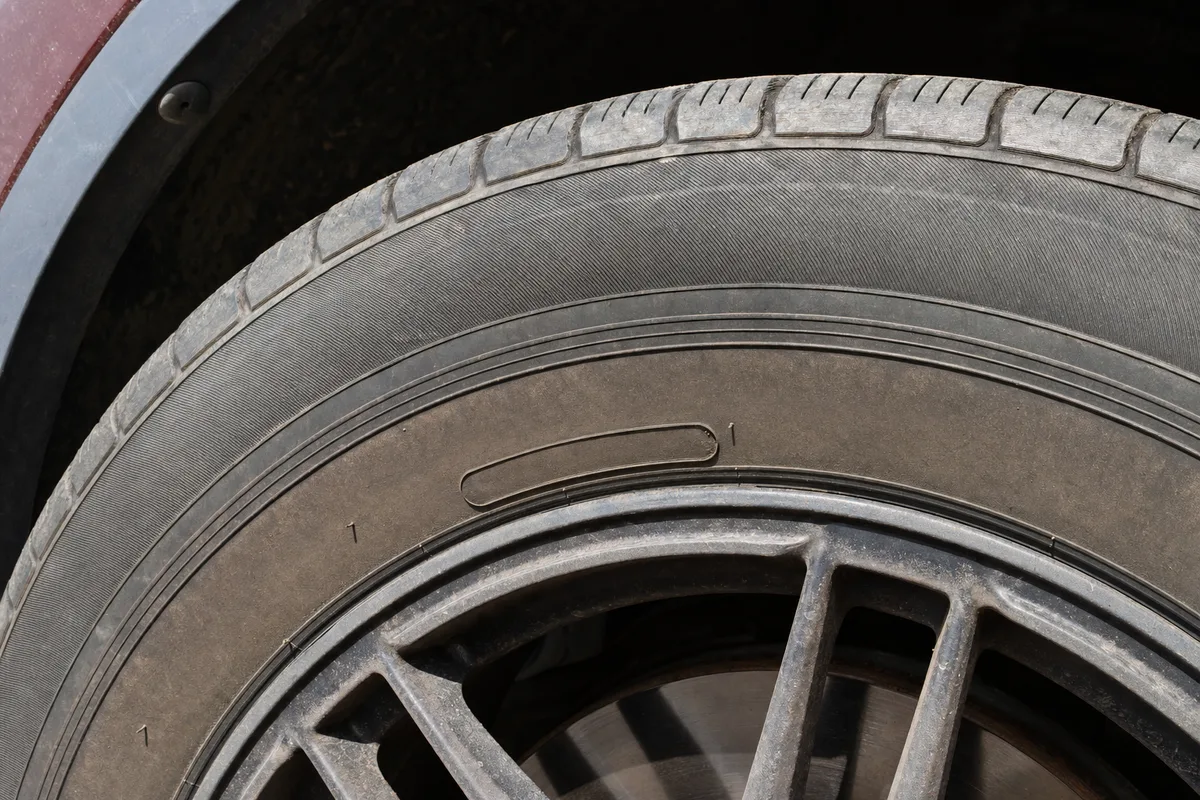
Breaking down 205/55R16 91V piece by piece
Every passenger tire sold in the US carries the same metric code, so once you can read one you can read them all.
| Part | Meaning | Example |
|---|---|---|
| 205 | Section width in millimeters, sidewall to sidewall | 205 mm (about 8.1 in) |
| 55 | Aspect ratio: sidewall height as a percent of width | 55% of 205 = 113 mm tall |
| R | Internal construction (R = radial, D = diagonal/bias, B = belted bias) | Nearly all modern tires are R |
| 16 | Wheel (rim) diameter in inches | Fits a 16 in wheel only |
| 91 | Load index: maximum weight per tire at full pressure | 91 = 1,356 lbs |
| V | Speed rating: maximum sustained speed | V = 149 mph |
A lower aspect ratio means a shorter, stiffer sidewall: a 225/40R18 handles sharper than a 225/60R18 but rides harder and is more vulnerable to pothole damage. The overall diameter matters too, because it affects speedometer accuracy and clearance. A 205/55R16 is about 24.9 in tall; changing size without keeping the diameter within roughly 3 percent can throw off your speedometer and ABS calibration.
Load index and speed rating: the two numbers people skip
The load index is a code, not a weight. Common passenger values run from 82 (1,047 lbs) to 100 (1,764 lbs); light trucks go higher, and LT tires list two indexes such as 121/118 for single and dual rear wheels. Multiply the per-tire number by four and you get the total the tires can carry, which must exceed the vehicle's gross weight rating.
Speed ratings are letters: S (112 mph), T (118 mph), H (130 mph), V (149 mph), W (168 mph), Y (186 mph). Nobody drives 149 mph on I-80, but the rating also signals heat resistance and construction stiffness, which is why a V-rated tire usually steers more precisely than an S-rated one in the same size. The safe rule is to match or exceed the placard's load index and speed rating. Going down a speed rating (V to H, for example) is common with winter tires and is legal in every state, but going down in load index is not something you should ever do. Full tables are in our speed rating and load index guide.
P, LT, T, ST and no letter at all: the prefixes
The letter before the width tells you what the tire was designed for.
- P (P225/65R17): P-metric, a US-standard passenger tire designed for cars, minivans, crossovers and light-duty SUVs and pickups.
- No letter (225/65R17): Euro-metric. Same purpose as P-metric, with slightly different load calculations; the two are interchangeable for most vehicles as long as the load index matches.
- LT (LT265/70R17): Light truck. Heavier construction, higher pressures (often 50 to 80 psi) and load ranges C, D, E or F for towing, hauling and three-quarter-ton and one-ton trucks. See our truck and SUV tire guide.
- T (T125/70D16): Temporary spare. Speed limited to 50 mph and typically inflated to 60 psi.
- ST (ST205/75R15): Special trailer. Stiff sidewalls for trailer loads and never meant for a car or truck axle.
- C after the size (215/65R16C): European commercial van tire, roughly equivalent to an LT.
Never swap an LT-required truck to P-metric tires to save money. The P-metric load figure has to be reduced by about 9 percent when used on a truck, and the sidewalls are not built for a loaded bed or trailer tongue weight.
Flotation sizes: 33x12.50R20 and friends
Off-road and truck tires often use an older inch-based format called a flotation size: 33x12.50R20LT. Here 33 is the overall diameter in inches, 12.50 is the section width in inches, R is radial and 20 is the wheel diameter. The metric equivalent of that size is roughly 285/75R20 or 305/65R20, depending on the brand's molding, so always compare the manufacturer's actual measured diameter rather than assuming.
Flotation sizes are simple to read but hide the aspect ratio, and two tires with the same nominal 33 in label can differ by half an inch in reality. That matters for fender clearance on a lifted truck. Popular flotation sizes include 31x10.50R15, 33x12.50R17, 35x12.50R20 and 37x12.50R17. When you search on this site, both formats are listed, for example 33x12.50R20.
Where to find your correct tire size
There are three places to look, in order of trust:
- The tire placard: a sticker on the driver's door jamb (occasionally in the glove box or fuel door). It lists the original equipment size for front and rear, the cold inflation pressure and the load limit. This is the legal reference for your vehicle.
- The owner's manual: repeats the placard and lists any optional sizes the automaker approved.
- The sidewall of the tires on the car: useful for confirmation, but the car may be wearing the wrong size already. Roughly one in ten used cars we see has non-original tires.
Some vehicles use staggered fitments, with wider tires on the rear (245/40R19 front, 275/35R19 rear on many BMWs and Mustangs). Those cannot be rotated front to back, so buy two of each size. Once you know your size, go straight to that size page, for instance 205/55R16 tires, and filter by type.
Other markings on the sidewall worth knowing
Beyond the size there is a lot of small print, and some of it matters when you shop.
- M+S: mud and snow, a tread-geometry claim with no performance test behind it. Most all-season tires carry it.
- 3PMSF (three-peak mountain snowflake): passed an actual acceleration test on packed snow. Required for all-weather and winter tires.
- DOT code: ends with four digits showing the week and year of manufacture, such as 2325 for the 23rd week of 2025. See how to read the DOT date.
- UTQG: treadwear, traction and temperature grades, for example 500 A A.
- Max load / max press: the tire's absolute limits, not your recommended pressure. Your recommended pressure is on the door placard.
- XL or Extra Load: a reinforced tire rated to carry more weight at higher pressure, often required on heavy EVs and three-row SUVs.
- Rotation arrow or Outside: directional or asymmetric tread that must be mounted a specific way.
Frequently asked questions
Can I put a different size tire on my car?
You can move to a size with the same overall diameter (within about 3 percent) and equal or higher load index, which is called plus sizing when you also change wheels. Anything else risks rubbing, speedometer error and stability-control confusion. Stick with the placard size unless a tire shop has confirmed the alternative fits.
What does the 91V at the end of a tire size mean?
91 is the load index, meaning each tire can carry 1,356 lbs at its maximum pressure. V is the speed rating, meaning the tire is tested to 149 mph. Your replacement tires should match or exceed both figures from the door placard.
Is there a difference between P225/65R17 and 225/65R17?
P-metric is the US passenger standard; the version without the P is the European metric standard. They are the same physical size and are interchangeable on cars and crossovers, with only minor differences in how the load rating is calculated. Do not mix them on the same axle.
Why is my tire 24.9 inches tall if it says 16?
The 16 is the wheel diameter, not the tire. Add the sidewall height twice (55 percent of 205 mm, or 4.4 in, above and below the rim) to the 16 in wheel and you get about 24.9 in overall. Online size calculators do this math for you.
Where is the tire size on my car?
Look at the sticker on the driver's door jamb, which lists the original size and cold pressure. The owner's manual has the same information. The sidewall of the current tires is a backup, but it may show a size that someone else chose.
Updated September 2026.