
All-Season Tires
The default tire for most US cars: usable year-round in mild climates.

Shopping for your Ferrari Roma. Original sizes 245/35R20 and 285/35R20. See every year and trim.
Find all-season tires for your car
We list the sizes your vehicle takes and send you straight to all-season tires in those sizes. Cars with different front and rear sizes are shown as two separate buys.
All-Season Tires for a Ferrari Roma
The Ferrari Roma runs a staggered set, so the front and rear are two different tires. Buy them as a pair each, never mixed across an axle.
245/35R20
All-Season Tires in this size typically runs $104–$227 per tire.
Shop all-season tires All brands
Also at Walmart, Costco and SimpleTire.
285/35R20
All-Season Tires in this size typically runs $316–$473 per tire.
Shop all-season tires All brands
Also at Walmart, Costco and SimpleTire.
Everything about Ferrari Roma tires
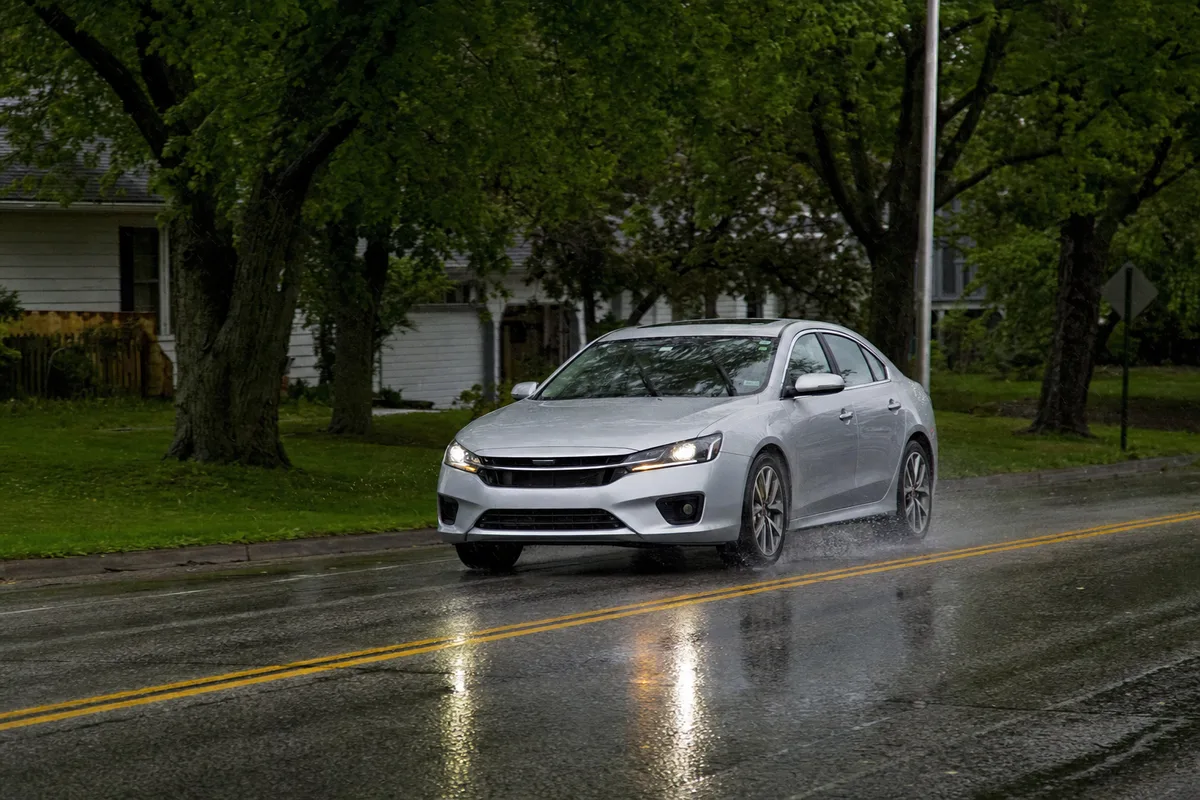
All-season tires are the tires most American cars leave the factory on. The compound is tuned to stay flexible in cool weather and firm enough in summer heat, and the tread has enough grooves and small sipes to shed rain and cope with light snow. They are built for long tread life and low noise rather than maximum grip, which is exactly what a commuter car, minivan or crossover needs.
Who they are for
The honest trade-off is that an all-season is a compromise in every direction. It stops shorter in the wet than a winter tire and longer than a summer tire, and below about 40 degrees Fahrenheit the compound starts to harden and snow traction fades. If you live where snow stays on the road for weeks, look at all-weather or dedicated winter tires instead.
The M+S marking on the sidewall is a tread-shape rating only; it does not mean the tire was tested in snow.
What to know before you buy
When comparing all-seasons, check the UTQG treadwear number (500 to 800 is typical for touring tires), the mileage warranty (55,000 to 85,000 miles for good ones), and the speed rating, which should meet or exceed what is molded on your door placard. Prices run from about 60 dollars for a budget 15-inch tire to 250 dollars or more for a premium 19-inch size, with most popular sizes landing between 100 and 180 dollars per tire.
Buy this if
Drivers in the South, West Coast and mild parts of the Midwest who want one set of tires that lasts a long time and is quiet.
- Longest tread life of any tire type, often 60,000 to 85,000 miles
- Quiet and comfortable for daily commuting
- Widest choice of sizes and prices
- No seasonal tire swaps to manage
Skip it if
You regularly drive on snow or ice, or you want sharp handling from a sports car.
- Snow and ice traction fade below 40 degrees Fahrenheit
- Less wet and dry grip than summer tires
- M+S marking is not a snow test
Best all-season tires right now


Ironman iMove Gen 2 AS
A US-distributed budget tire with a 50,000-mile warranty and road-hazard coverage.




Common sizes for all-season tires
All-Season Tires: common questions
Are all-season tires good in snow?
They are adequate in light, occasional snow and poor on ice or packed snow. The compound hardens below about 40 degrees, and the tread lacks the dense siping of a winter tire. If snow is on the road for more than a few days a year, an all-weather tire with the three-peak mountain snowflake symbol is a better one-tire solution.
How long do all-season tires last?
Good touring all-seasons carry warranties of 60,000 to 85,000 miles and most deliver 50,000 to 70,000 in real use. Budget tires often last 30,000 to 45,000 miles. Rotation every 5,000 to 7,500 miles and correct inflation are the biggest factors you control.
What does M+S mean on an all-season tire?
M+S (mud and snow) is a marking based on tread geometry, meaning a certain percentage of the tread is open grooves. It is not a performance test. The three-peak mountain snowflake symbol, by contrast, means the tire passed a standardized snow traction test and is the marking to look for if snow matters.
Should I buy all-season or all-weather tires?
If you see real snow a few times a year and do not want to swap tires, buy all-weather. If your winters are mild or you already own winter tires, an all-season will be quieter, cheaper and last longer. All-weather tires typically give up 10,000 to 20,000 miles of tread life for their snow ability.