

Aston Martin tire sizes
3 Aston Martin models, with the original tire size for each year range and what that size costs today, from $125 per tire.
We cover 3 Aston Martin models across 6 factory fitments, spanning model years 2017 to 2024. The size that turns up most often on a Aston Martin is 255/40R20, followed by 295/35R20 and 285/40R22. Wheel diameters run from 20 to 22 inches, so the trim and wheel package matter as much as the model year.
Aston Martin approves specific tires. Aston Martin-approved tires are marked AML. Aston Martin works with a small number of tire makers on each model and marks the result AML. The approval matters most on the DB and Vantage cars, where the rear tire is considerably wider than the front.
Pick your model below to see the size for every year and trim, what it costs from budget to premium, and which tires are worth buying in that size. If you already know your size, search by size instead, and if you are not sure where to find it, our guide on reading a tire size shows exactly where the placard sits.
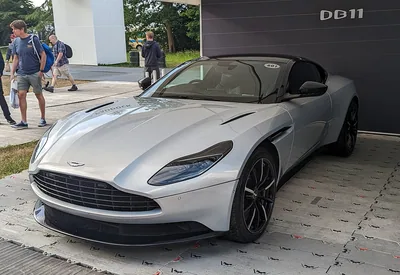 DB11
2017-2023 · 2 sizes
255/40R20 from $125
DB11
2017-2023 · 2 sizes
255/40R20 from $125
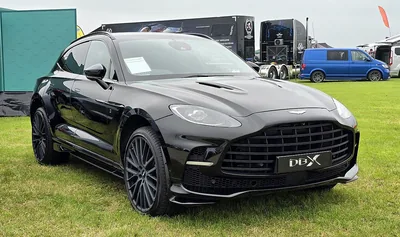 DBX
2021-2024 · 2 sizes
285/40R22 from $245
DBX
2021-2024 · 2 sizes
285/40R22 from $245
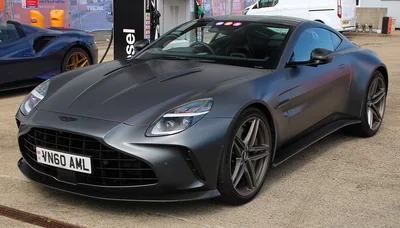 Vantage
2019-2024 · 2 sizes
255/40R20 from $125
Vantage
2019-2024 · 2 sizes
255/40R20 from $125
Aston Martin is a small British maker of front-engined grand tourers and, since 2020, the DBX SUV. US sales are in the low thousands a year, and the United States is its largest single market. The cars are hand-finished in small series and priced against Ferrari and Bentley rather than against Porsche.
For a tire buyer that means very wide rear fitments, short production runs per size, and limited choice inside each size.
Tires on a Aston Martin
Aston Martin runs its own homologation program and marks approved tires with an AM code, usually seen as AML or as AM followed by a number; Wikipedia's tire code reference lists the AMx family as Aston Martin original equipment alongside BMW's star and Porsche's N codes. A tire in the right size without that marking is built to the tire maker's own specification rather than Aston's, and on cars with this much rear power the difference shows up in behavior at the limit rather than in whether it fits. Every current Aston is staggered, and heavily so: the DB11 and the Vantage both run 255/40R20 front and 295/35R20 rear, and the DBX goes to 285/40R22 front and 325/35R22 rear.
That means no rotation, rears that wear roughly twice as fast as fronts, and a bill for a pair rather than a set. Choice is narrow, because Pirelli, Michelin and Bridgestone each homologate only a handful of tires per car and in some sizes just one pattern carries the AM marking. Owners who accept a non-approved tire usually do it on a winter set, where no approved option exists at all, and there the more important rule is to keep both axles on the same pattern.
The models that matter
The DBX is the volume model and the most expensive to shoe, on 285/40R22 front and 325/35R22 rear. The Vantage and the DB11 share 255/40R20 front and 295/35R20 rear, which makes cross-shopping tires between the two easier than the price difference suggests. Older DB9 and V8 Vantage models used 19 and 20 inch staggered sets in the same 245 to 295 millimeter range.
What owners find out later
A 325/35R22 is a size with very few manufacturers behind it, and US stock can mean a wait of days rather than an over-the-counter purchase. None of the current cars carries a spare, so a damaged tire on a road trip means a flatbed. The DBX's 22 inch wheels are heavy and use direct TPMS sensors, so any winter wheel package needs its own sensors programmed to the car.
Aston's carbon ceramic brake option leaves very little room behind the spokes, which limits which aftermarket wheels clear even when the bolt pattern matches.
Did you know?
- Wikipedia's tire code reference lists AMx as the Aston Martin original equipment marking, in the same table as BMW's star and Audi's AO.
- The DBX uses a 325/35R22 rear, wider than most supercars of the last decade.
- The United States buys more Aston Martins than any other single country.