

Jaguar tire sizes
5 Jaguar models, with the original tire size for each year range and what that size costs today, from $50 per tire.
We cover 5 Jaguar models across 8 factory fitments, spanning model years 1959 to 2024. The size that turns up most often on a Jaguar is 185R15, followed by 215/70R15 and 255/55R19. Wheel diameters run from 15 to 20 inches, so the trim and wheel package matter as much as the model year.
Jaguar approves specific tires. Jaguar-approved tires carry a J on the sidewall. Jaguar and Land Rover run a joint approval program, so you will see J and LR tires from the same families. The approval covers ride comfort and cabin noise, both of which Jaguar tunes tightly.
Pick your model below to see the size for every year and trim, what it costs from budget to premium, and which tires are worth buying in that size. If you already know your size, search by size instead, and if you are not sure where to find it, our guide on reading a tire size shows exactly where the placard sits.
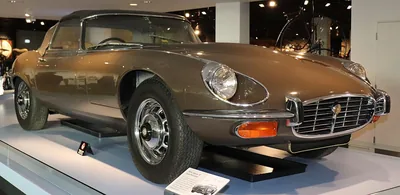 E-Type
1961-1974 · 2 sizes
215/70R15 from $50
E-Type
1961-1974 · 2 sizes
215/70R15 from $50
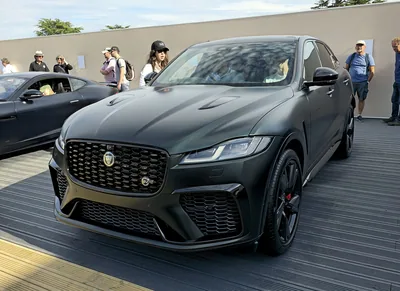 F-Pace
2017-2024 · 1 size
255/55R19 from $100
F-Pace
2017-2024 · 1 size
255/55R19 from $100
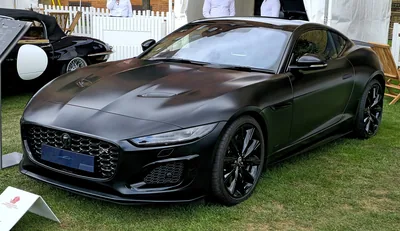 F-Type
2014-2024 · 2 sizes
245/40R19 from $110
F-Type
2014-2024 · 2 sizes
245/40R19 from $110
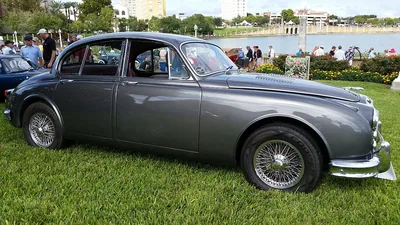 Mk2
1959-1967 · 1 size
185R15 from $115
Mk2
1959-1967 · 1 size
185R15 from $115
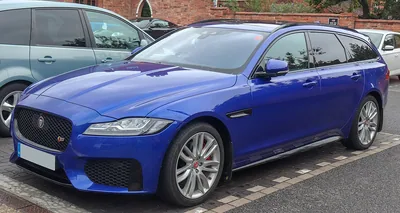 XF
2016-2020 · 2 sizes
245/45R18 from $95
XF
2016-2020 · 2 sizes
245/45R18 from $95
Jaguar has been owned by Tata Motors since 2008 and shares its engineering with Land Rover. In the United States the brand has wound down almost completely: sales fell into the single-digit thousands and the existing lineup was taken off sale as Jaguar prepares an all-electric relaunch. That leaves a large parc of F-Pace, XF and F-Type owners buying tires, plus one of the strongest classic followings on this site around the E-Type and the Mk2.
The reputation is ride quality and steering feel rather than durability.
Tires on a Jaguar
Jaguar-approved tires carry a J on the sidewall, and Jaguar runs the approval program jointly with Land Rover, whose tires are marked LR, so you will see the same tire families with both codes. The approval is weighted toward ride comfort and cabin noise, which Jaguar tunes tightly, and a tire in the same size without the J is built to the tire maker's own specification; it will fit and be safe, but the car will not necessarily sound or ride the way it left the factory. The F-Type is staggered at 245/40R19 front and 275/35R19 rear in V6 form, and the XF's 20 inch package uses a 255/35R20 front with a wider rear, so four identical tires is wrong on both.
The F-Pace, the volume model, is square on 255/55R19. Wheel sizes have grown from 15 inch on an E-Type to 19 and 20 inch as standard today, and the modern short sidewalls sit on a suspension tuned for compliance, which is a combination that punishes potholes. On the classics the original 185R15 fitment of the E-Type Series 1 and 2 and the Mk2 is still made as a modern classic radial, which is not true of every 1960s European size.
The models that matter
The F-Pace is the volume model, on 255/55R19. The XF runs 245/45R18 on base cars and 255/35R20 on the 20 inch package. The F-Type is staggered at 245/40R19 and 275/35R19.
The classics are the 1961 to 1971 E-Type Series 1 and 2 on 185R15, the 1971 to 1974 Series 3 V12 on 215/70R15, and the 1959 to 1967 Mk2 on 185R15.
What owners find out later
The 185R15 that the E-Type and Mk2 need is a period radial size with no aspect ratio in the name, and it is not the same as a 185/80R15 or a 185/70R15; buying by the number alone changes the diameter and the look. Because Jaguar has withdrawn its lineup from US sale, dealer tire stock is thinning and the J-marked versions of several sizes are getting harder to source, which pushes more owners to unmarked equivalents. The F-Type's staggered fitment cannot be rotated, so rears wear out roughly twice as fast and the economical purchase is a pair.
Did you know?
- Jaguar and Land Rover run a joint tire approval program, marking tires J and LR from the same tire families.
- The E-Type's 185R15 is a period radial size without an aspect ratio in its name, and it is still in production for classics.
- Jaguar took its existing model range off sale in the United States while preparing an all-electric relaunch.