

Lincoln tire sizes
9 Lincoln models, with the original tire size for each year range and what that size costs today, from $62 per tire.
We cover 9 Lincoln models across 14 factory fitments, spanning model years 1984 to 2024. The size that turns up most often on a Lincoln is 255/55R20, followed by 275/45R21 and 235/55R18. Wheel diameters run from 16 to 22 inches, so the trim and wheel package matter as much as the model year.
Lincoln does not stamp an approval code on tires the way Porsche and BMW do, so any tire in the right size that meets the load index and speed rating on the door placard is a legitimate replacement. Pick on wet braking, tread life and price instead.
Pick your model below to see the size for every year and trim, what it costs from budget to premium, and which tires are worth buying in that size. If you already know your size, search by size instead, and if you are not sure where to find it, our guide on reading a tire size shows exactly where the placard sits.
 Aviator
2020-2024 · 2 sizes
255/55R20 from $128
Aviator
2020-2024 · 2 sizes
255/55R20 from $128
 Corsair
2020-2024 · 1 size
235/55R18 from $95
Corsair
2020-2024 · 1 size
235/55R18 from $95
 Mark VII
1984-1992 · 1 size
225/60R16 from $62
Mark VII
1984-1992 · 1 size
225/60R16 from $62
 MKS
2013-2016 · 1 size
245/45R19 from $115
MKS
2013-2016 · 1 size
245/45R19 from $115
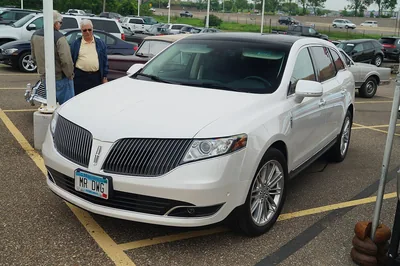 MKT
2010-2019 · 1 size
255/45R19 from $115
MKT
2010-2019 · 1 size
255/45R19 from $115
 MKX
2007-2015 · 2 sizes
255/50R20 from $128
MKX
2007-2015 · 2 sizes
255/50R20 from $128
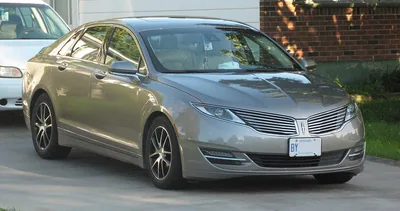 MKZ
2007-2020 · 2 sizes
245/45R18 from $95
MKZ
2007-2020 · 2 sizes
245/45R18 from $95
 Nautilus
2019-2024 · 1 size
255/45R20 from $125
Nautilus
2019-2024 · 1 size
255/45R20 from $125
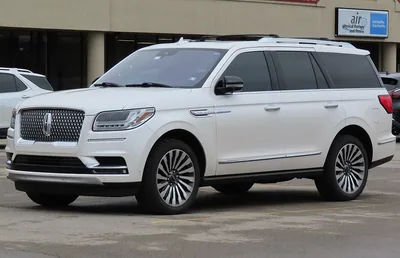 Navigator
1998-2024 · 3 sizes
285/45R22 from $150
Navigator
1998-2024 · 3 sizes
285/45R22 from $150
Lincoln is Ford's luxury brand and has become an all-crossover lineup in the United States, built around the Corsair, Nautilus, Aviator and Navigator, selling somewhere around 100,000 vehicles a year. The sedans are gone: the MKZ ended in 2020 and the Continental in 2020. Lincoln's modern positioning is quiet, comfortable American luxury rather than a sporting alternative, and the Navigator is the halo product.
Tire sizes are large and the top trims run 21 and 22 inch wheels.
Tires on a Lincoln
Lincoln stamps no approval code on its tires, the same as Ford, so the door placard is the complete specification. Fitments are square across the range, which keeps rotation simple. The spread within a model is what costs money: an Aviator runs 255/55R20 on most trims and 275/45R21 on Black Label, and a Navigator runs 285/45R22 on Reserve and Black Label where earlier ones used 275/45R22 and, going back to 1998, 255/70R16.
That 22 inch Navigator tire is one of the more expensive mainstream SUV fitments, and it sits under a vehicle that can weigh close to 6,000 pounds, so both tread life and pothole resistance are worse than the price would suggest. Lincoln tunes its suspension, including adaptive damping on several models, around a specific tire stiffness, which is why a much firmer replacement can make the ride worse rather than better even when it is a more expensive tire. Most owners stay with a quiet grand touring all-season, and the ones who tow with a Navigator move to a load-rated highway tire rather than an all-terrain, because the vehicle is not used off pavement.
The models that matter
The Navigator is the halo model, on 285/45R22 from 2018 and 275/45R22 for 2015 to 2017. The Aviator runs 255/55R20 or 275/45R21, the Nautilus 255/45R20 and the Corsair 235/55R18. Older cars still being shod are the MKZ on 245/45R18, the MKX on 255/50R20, and the MKT on 255/45R19.
What owners find out later
The Navigator's 285/45R22 has roughly five inches of sidewall under a 6,000 pound vehicle, and rim damage from potholes is a common claim; a 20 inch winter package is the usual answer in northern states. Many Lincolns carry only a temporary spare, and on the 22 inch trims it is dramatically smaller in diameter than the fitted tires, which limits speed and distance more than owners expect. Direct TPMS sensors need a relearn with a tool after rotation on most models.
Because Lincoln shares platforms with Ford, retailers sometimes list the Explorer or Edge size for an Aviator or Nautilus, which is close but usually one wheel diameter out.
Did you know?
- A Navigator on 22 inch wheels uses the same tire size as several full-size luxury SUVs costing twice as much.
- Lincoln has sold no sedan in the United States since 2020, so every current fitment is a crossover size.
- Lincoln stamps no approval code on its tires, exactly like Ford, so any tire meeting the placard is correct.