
Polestar tire sizes
2 Polestar models, with the original tire size for each year range and what that size costs today, from $110 per tire.
We cover 2 Polestar models across 4 factory fitments, spanning model years 2021 to 2024. The size that turns up most often on a Polestar is 245/40R19, followed by 245/45R19 and 245/40R20. Wheel diameters run from 19 to 21 inches, so the trim and wheel package matter as much as the model year.
Polestar does not stamp an approval code on tires the way Porsche and BMW do, so any tire in the right size that meets the load index and speed rating on the door placard is a legitimate replacement. Pick on wet braking, tread life and price instead.
Pick your model below to see the size for every year and trim, what it costs from budget to premium, and which tires are worth buying in that size. If you already know your size, search by size instead, and if you are not sure where to find it, our guide on reading a tire size shows exactly where the placard sits.
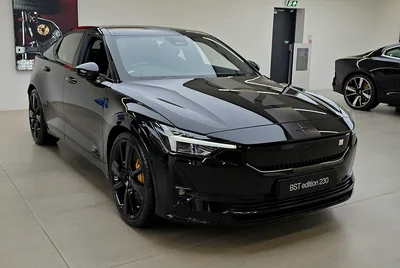

Polestar began as Volvo's performance arm and was spun off as a separate electric brand in 2017, selling in the United States since 2020. The Polestar 2 fastback and the Polestar 3 SUV are the models on sale here, and US volume is small, in the low tens of thousands. The cars share engineering and suppliers with Volvo, and they are built for handling in a way Volvo's own cars are not.
For tires that means Volvo's weight and Volvo's quietness concerns combined with wider, lower fitments.
Tires on a Polestar
Polestar does not stamp its own approval letter on tires, so the door placard is the specification you match. What matters far more on these cars is the type of tire rather than a code: Polestar original fitments are EV-specific, usually with acoustic foam bonded inside the tread to cut road noise that has no engine to hide behind, and with compounds chosen for rolling resistance and for the torque an electric motor delivers from zero. A foam-lined tire costs more and some shops will not repair a puncture in one, which is worth knowing before a nail forces the decision.
Fitments are square, so four identical tires and normal rotation. The Polestar 2 runs 245/40R19, 245/45R19 or 245/40R20, and the Polestar 3 runs 265/45R21. Both are heavy: a Polestar 2 is around 4,700 pounds and a Polestar 3 well over 5,000, and that mass plus instant torque means rear tire wear on the dual-motor cars is faster than owners coming from a gasoline car expect.
Many owners replace the OE tire with a conventional premium touring tire, gaining tread life and losing a little range and some quietness.
The models that matter
The Polestar 2 is the volume model, on 245/40R19 or 245/45R19 on the 19 inch wheels and 245/40R20 on the 20 inch package. The Polestar 3 runs 265/45R21. Both share their basic engineering with Volvo, so the sizes sit close to the XC40 and XC60 range, but the aspect ratios are lower.
What owners find out later
The acoustic foam inside many Polestar original tires is the single most consequential thing about them: it is why the cabin is quiet, why the tires cost more, and why a puncture repair may be refused. Neither car carries a spare, only an inflator kit. The Polestar 2 is offered in both 245/40R19 and 245/45R19, two different diameters on the same wheel size, so ordering by wheel diameter alone is not enough.
Because the cars are heavy and quiet, a cheaper replacement tire tends to announce itself as road noise long before it shows up as a grip problem.
Did you know?
- Polestar original tires are usually foam-lined for noise, which makes them quieter but harder to repair.
- The Polestar 2 is offered in two different 19 inch fitments with different sidewall heights.
- Polestar was Volvo's performance division before becoming a separate electric brand in 2017.