
Pontiac tire sizes
11 Pontiac models, with the original tire size for each year range and what that size costs today, from $45 per tire.
We cover 11 Pontiac models across 22 factory fitments, spanning model years 1965 to 2009. The size that turns up most often on a Pontiac is 215/65R15, followed by 225/70R15 and 215/70R14. Wheel diameters run from 14 to 17 inches, so the trim and wheel package matter as much as the model year.
Pontiac does not stamp an approval code on tires the way Porsche and BMW do, so any tire in the right size that meets the load index and speed rating on the door placard is a legitimate replacement. Pick on wet braking, tread life and price instead.
Pick your model below to see the size for every year and trim, what it costs from budget to premium, and which tires are worth buying in that size. If you already know your size, search by size instead, and if you are not sure where to find it, our guide on reading a tire size shows exactly where the placard sits.
 Bonneville
1965-1991 · 3 sizes
215/65R15 from $80
Bonneville
1965-1991 · 3 sizes
215/65R15 from $80
 Firebird
1970-2002 · 4 sizes
215/60R16 from $62
Firebird
1970-2002 · 4 sizes
215/60R16 from $62
 Firebird Formula
1970-1981 · 2 sizes
225/70R15 from $100
Firebird Formula
1970-1981 · 2 sizes
225/70R15 from $100
 Firebird Trans Am
1970-2002 · 5 sizes
275/40R17 from $130
Firebird Trans Am
1970-2002 · 5 sizes
275/40R17 from $130
 Firebird Trans Am GTA
1987-1992 · 1 size
245/50R16 from $110
Firebird Trans Am GTA
1987-1992 · 1 size
245/50R16 from $110
 G3
2009-2009 · 1 size
185/60R14 from $45
G3
2009-2009 · 1 size
185/60R14 from $45
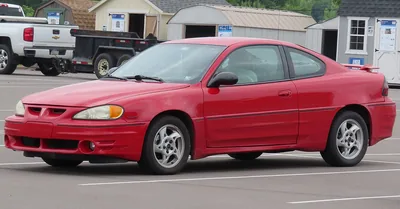 Grand Am
1999-2005 · 1 size
215/60R15 from $50
Grand Am
1999-2005 · 1 size
215/60R15 from $50
 Grand Prix
2004-2008 · 1 size
225/60R16 from $62
Grand Prix
2004-2008 · 1 size
225/60R16 from $62
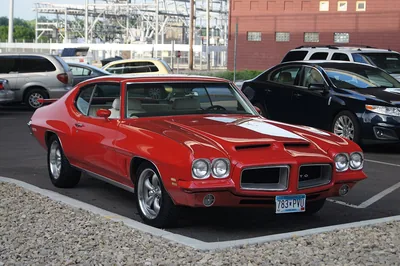 GTO
1966-1972 · 2 sizes
245/60R15 from $110
GTO
1966-1972 · 2 sizes
245/60R15 from $110
 Sunfire
1995-2005 · 1 size
195/70R14 from $45
Sunfire
1995-2005 · 1 size
195/70R14 from $45
 Torrent
2006-2009 · 1 size
235/65R16 from $68
Torrent
2006-2009 · 1 size
235/65R16 from $68
Pontiac was General Motors' performance division, the brand behind the GTO, the Firebird and the Trans Am, and for decades GM's answer to the question of what a young buyer should want. GM announced its closure during the 2009 bankruptcy and the last Pontiacs were built for the 2010 model year. The brand leaves behind two distinct tire audiences: restorers working on 1960s and 1970s GTOs and Firebirds, and owners of 1990s and 2000s Grand Ams, Grand Prix and Sunfires still on the road.
Both are well served, because almost every size converts to something common.
Tires on a Pontiac
Pontiac was a GM division, so original tires from the 1980s onward carry a General Motors TPC SPEC number molded into the sidewall; replacement tires do not, which is normal. The classics are the interesting part. A 1966 to 1972 GTO left the factory on bias-ply F70-14 tires and converts to 215/70R14, and owners who fit 15 inch wheels go to 245/60R15.
The Firebird spans an unusual range for one nameplate: 205/70R14 on a 1970s base car, 215/65R15 on a mid-1980s car, 235/60R15 on a 1982 to 1986 Trans Am, 245/50R16 on a Trans Am GTA, and 275/40R17 on a 1993 to 2002 WS6, which is a genuine performance size still widely available. Conversions from lettered sizes must be done by overall diameter rather than by matching numbers, which is why F60-15 becomes 255/60R15. Coker Tire and Diamond Back supply both bias-ply reproductions and radials with period raised white letters, and for a car that gets driven the radial is the better tire by a wide margin.
The practical limit on the older cars is Rally wheel width, typically six or seven inches, which will not properly support the wide tires the styling invites.
The models that matter
The Firebird and Trans Am carry the most fitments: 205/70R14 and 215/70R15 on 1970s cars, 225/70R15 on a 1975 to 1981 Trans Am, 235/60R15 on the 1982 to 1986 cars, 245/50R16 on the GTA and 275/40R17 on the WS6. The GTO converts to 215/70R14 or 245/60R15 on 15 inch wheels. The later sedans are ordinary: Grand Am and Bonneville on 215/60R15 and 215/65R15, Grand Prix on 225/60R16, Sunfire on 195/70R14.
What owners find out later
The 1993 to 2002 Firebird WS6 shares its 275/40R17 fitment with the Camaro Z28 and SS of the same era, so the choice is wider than a Pontiac-only search suggests, and the same trick works across most GM platform twins. Lettered sizes such as F70-14 cannot be converted by number matching, and only a diameter conversion keeps the speedometer honest. Wheels from the 1960s frequently start leaking at the rim seat once a hardened old tire is broken down.
Did you know?
- A Firebird can need anything from a 14 to a 17 inch tire depending on year and trim, one of the widest spreads of any single nameplate.
- The Firebird WS6 and Camaro SS of the 1990s use the same 275/40R17, so stock can be found under either name.
- GM built the last Pontiac for the 2010 model year, after announcing the brand's closure during the 2009 bankruptcy.