
Honda Pilot tire size
Original tire sizes for the Honda Pilot, model years 2003 through 2024. Trim levels and wheel packages change the size within the same year, so confirm on the door-jamb sticker before ordering.
Check before you order. The surest answer is the tires on the car right now: the size is molded into the sidewall. The placard inside the driver's door tells you what the factory fitted, which can differ from what a previous owner put on. Our guide on reading a tire size shows exactly where to look.
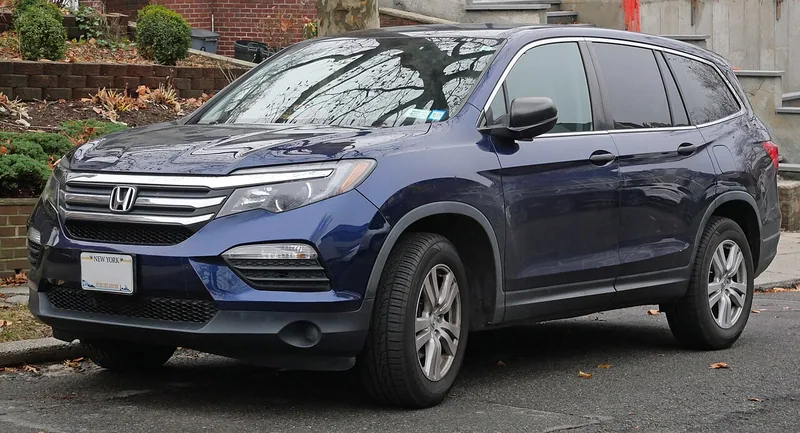
Size by year and trim
| Model years | Trim or package | Tire size | From |
|---|---|---|---|
| 2023-2024 | LX/Sport | 255/60R18 | $115 |
| 2023-2024 | Touring/Elite | 255/50R20 | $128 |
| 2016-2022 | Standard | 245/60R18 | $115 |
| 2016-2022 | Touring/Elite | 245/50R20 | $128 |
| 2009-2015 | Standard | 245/65R17 | $105 |
| 2003-2008 | Standard | 235/70R16 | $95 |
Tire size by model year
| Model year | Tire size | Trim or package | From |
|---|---|---|---|
| 2024 Honda Pilot | 255/60R18, 255/50R20 | LX/Sport or Touring/Elite | $115 |
| 2023 Honda Pilot | 255/60R18, 255/50R20 | LX/Sport or Touring/Elite | $115 |
| 2022 Honda Pilot | 245/60R18, 245/50R20 | Standard or Touring/Elite | $115 |
| 2021 Honda Pilot | 245/60R18, 245/50R20 | Standard or Touring/Elite | $115 |
| 2020 Honda Pilot | 245/60R18, 245/50R20 | Standard or Touring/Elite | $115 |
| 2019 Honda Pilot | 245/60R18, 245/50R20 | Standard or Touring/Elite | $115 |
| 2018 Honda Pilot | 245/60R18, 245/50R20 | Standard or Touring/Elite | $115 |
| 2017 Honda Pilot | 245/60R18, 245/50R20 | Standard or Touring/Elite | $115 |
| 2016 Honda Pilot | 245/60R18, 245/50R20 | Standard or Touring/Elite | $115 |
| 2015 Honda Pilot | 245/65R17 | Standard | $105 |
| 2014 Honda Pilot | 245/65R17 | Standard | $105 |
| 2013 Honda Pilot | 245/65R17 | Standard | $105 |
Show the remaining 10 model years
| Model year | Tire size | Trim or package | From |
|---|---|---|---|
| 2012 Honda Pilot | 245/65R17 | Standard | $105 |
| 2011 Honda Pilot | 245/65R17 | Standard | $105 |
| 2010 Honda Pilot | 245/65R17 | Standard | $105 |
| 2009 Honda Pilot | 245/65R17 | Standard | $105 |
| 2008 Honda Pilot | 235/70R16 | Standard | $95 |
| 2007 Honda Pilot | 235/70R16 | Standard | $95 |
| 2006 Honda Pilot | 235/70R16 | Standard | $95 |
| 2005 Honda Pilot | 235/70R16 | Standard | $95 |
| 2004 Honda Pilot | 235/70R16 | Standard | $95 |
| 2003 Honda Pilot | 235/70R16 | Standard | $95 |
Which brand should you pick?
Honda does not stamp its own approval code on tires the way Porsche or BMW do. Any tire in the right size that meets or exceeds the load index and speed rating on your door placard is a legitimate replacement, so pick on wet braking, tread life and price. Our picks for each size are on the size pages below.
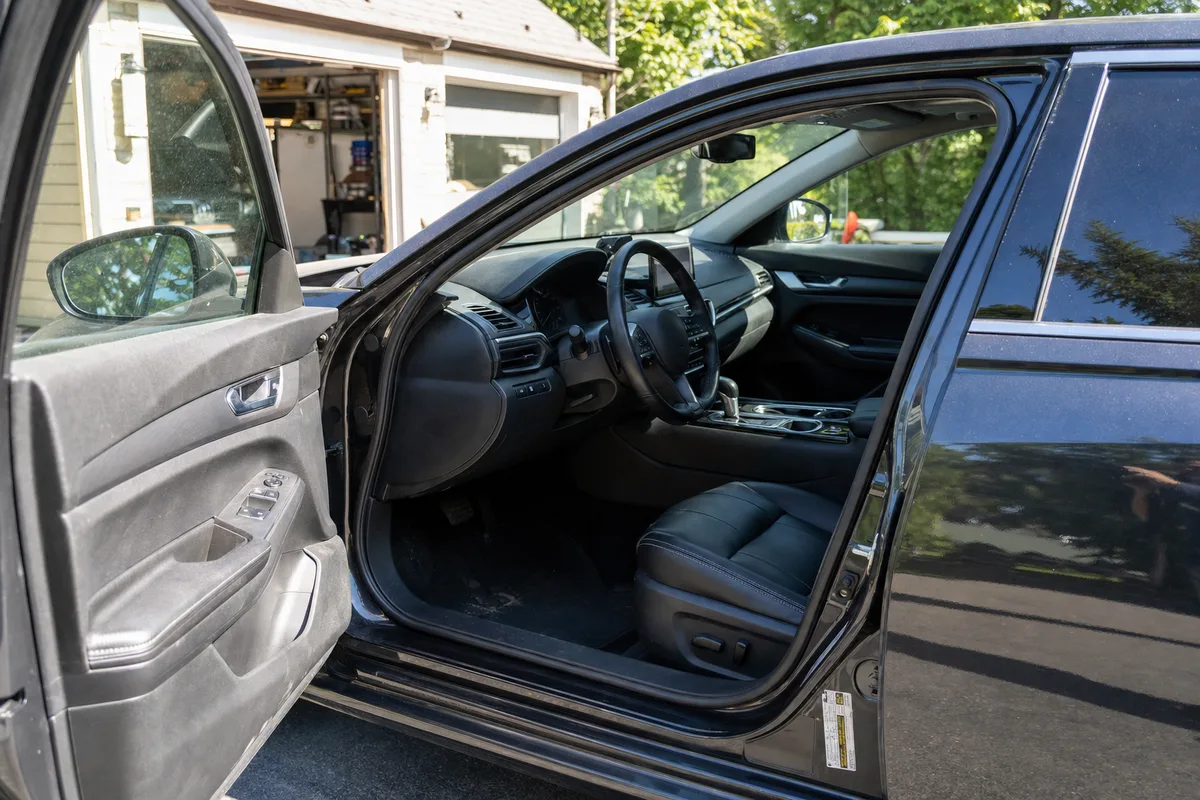
The drawing carries the sizes we list for this car, so you know what you are looking for. The placard on the car is still the final word, and it is the only place that gives the cold pressures: the number molded into the sidewall is the maximum the tire can hold, not what your car wants.
What those tires cost
About the Honda Pilot
The Pilot is Honda's three-row mid-size crossover, built on a unibody platform shared over the years with the Odyssey and Acura MDX. Tire shoppers land here because a loaded Pilot with eight people aboard is a heavy vehicle and the load index on the replacement tires matters. Sizes step up sharply by trim, from 16-inch wheels on early cars to 20s on Touring and Elite models.
Launched in 2002. Launched in 2002 as a 2003 model after being shown at the Detroit auto show, the Pilot gave Honda its first three-row SUV, using the Odyssey's front-drive unibody platform rather than a truck frame and slotting above the two-row Passport in the lineup.
How to tell the model years apart
Wheel and tire sizes follow the generation, not the badge, so identifying yours matters before you order.
2003-2008
First generation (YF1/2)
Upright, slab-sided body with squared wheel arches, a flat hood and a plain two-bar grille. It rides on 16- or 17-inch wheels and looks deliberately truck-like despite being a unibody. Built in Alliston, Ontario until 2007, then Lincoln, Alabama.
Tire sizes: 235/70R16
2009-2015
Second generation (YF3/4)
Even boxier, with a blunt vertical nose, a thick chrome grille bar and near-vertical rear glass. Standard wheels are 17-inch with 245/65R17 tires, and the 2012 facelift softened the front bumper and grille. The three-row cabin gained a proper fold-flat third row.
Tire sizes: 245/65R17
2016-2022
Third generation (YF5/6)
A clear break from the boxy look, with rounded corners, a sloping roofline, a thin chrome grille and LED lighting. Lower trims run 18s on 245/60R18 while Touring and Elite get 20-inch wheels on 245/50R20, and the top trims added a nine-speed automatic. The 2019 facelift brought a larger grille and a physical volume knob.
2023-2024
Fourth generation (YG)
Squared-off again with a flat hood, upright grille and a much more angular body than the 2016-2022 car. LX and Sport ride on 18s with 255/60R18, Touring and Elite on 20s with 255/50R20, and the new TrailSport adds all-terrain tires, a steel skid plate and a one-inch lift. Both tire widths grew by 10 mm over the previous generation.
What the press said
Reviewers have always rated the Pilot highly on the things families actually use: seat space, a usable third row, quiet highway manners and Honda's V-6 drivetrain. The criticism is that it does nothing memorably well, and that the interior on top trims is not as rich as the price suggests. The 2016 car was praised for its ride and packaging but criticized for the nine-speed automatic's manners, and the 2023 redesign won credit for a more rugged look and a genuinely capable TrailSport version. Across generations the verdict is competence without character.
The Honda Pilot is a sensible and inoffensive pick in the mid-size, three-row SUV segment.
Car and Driver, 2026
| Model year | Units sold in the US |
|---|---|
| 2014 | 108,857 |
| 2015 | 136,212 |
| 2016 | 120,772 |
| 2017 | 127,279 |
| 2018 | 159,615 |
| 2019 | 135,008 |
| 2020 | 123,813 |
| 2021 | 143,062 |
| 2022 | 99,567 |
| 2023 | 110,298 |
| 2024 | 141,245 |
| 2025 | 124,209 |
US sales have run around 100,000 to 160,000 a year for the past decade, making the Pilot a steady mid-pack seller in a crowded three-row class.
Was it a success?
A solid commercial performer that has never led its segment on volume but has never been in trouble either. Resale is good, the J-series V-6 has a strong reliability record, and the main things to check on used examples are the timing belt interval and, on 2016-2020 cars, the nine-speed automatic's shift quality. It remains an easy recommendation for anyone who needs three rows and does not want a minivan.
Did you know?
- The Pilot was built in Alliston, Ontario until April 2007, when production moved to Honda's plant in Lincoln, Alabama.
- The first-generation Pilot shared its platform with the Odyssey minivan and the Acura MDX, which is why it drives more like a tall car than a truck.
- The 2016 Pilot was the first to offer a nine-speed automatic, but only on Touring and Elite trims; lower trims kept a six-speed, so two Pilots of the same year could have completely different transmissions.
Tire options on the Honda Pilot
Pilot fitments are 235/70R16 on the first generation, 245/65R17 on 2009-2015 cars, then 245/60R18 or 245/50R20 for 2016-2022 and 255/60R18 or 255/50R20 for 2023 and later. Nothing is staggered and nothing uses run-flats, but load index matters: a fully loaded eight-seat Pilot sits close to its axle weight ratings, so stay with the standard or extra-load rating rather than dropping to a lighter tire. Factory rubber has generally been touring all-seasons from Continental, Bridgestone or Michelin, and the 2023 TrailSport ships with Continental TerrainContact all-terrains on 18s. Owners on 20-inch Touring and Elite wheels often buy a second set of 18s for winter tires, which are cheaper and ride better. If you tow near the 5,000-pound limit on an all-wheel-drive Pilot, keep the original size and load rating and watch the pressures.
Sources: en.wikipedia.org, caranddriver.com, goodcarbadcar.net.
Honda Pilot tires: common questions
What size tires does a Honda Pilot take?
The most common original size is 255/60R18. Other model years and trims use different sizes, so check the list on this page and confirm against the sticker inside your driver's door.
Can I fit a different size on my Honda Pilot?
You can, within limits: the overall diameter should stay within about 3 percent of the original, and the load index and speed rating must meet or exceed the door placard. Anything further changes your speedometer reading and can rub at full lock.
Where is the tire size on a Honda Pilot?
Open the driver's door and look at the white and yellow placard on the door jamb or the B-pillar. The same size is also molded into the sidewall of the tires currently on the car, unless someone changed them.
What size tires does a 2024 Honda Pilot take?
The 2024 Honda Pilot came from the factory on 255/60R18 and 255/50R20. Wheel packages can change that within the same model year, so check the placard inside the door jamb before you order.
What size tires does a 2023 Honda Pilot take?
The 2023 Honda Pilot came from the factory on 255/60R18 and 255/50R20. Wheel packages can change that within the same model year, so check the placard inside the door jamb before you order.
What size tires does a 2022 Honda Pilot take?
The 2022 Honda Pilot came from the factory on 245/60R18 and 245/50R20. Wheel packages can change that within the same model year, so check the placard inside the door jamb before you order.